A different way to travel: Azadeh Abedinzadeh explains
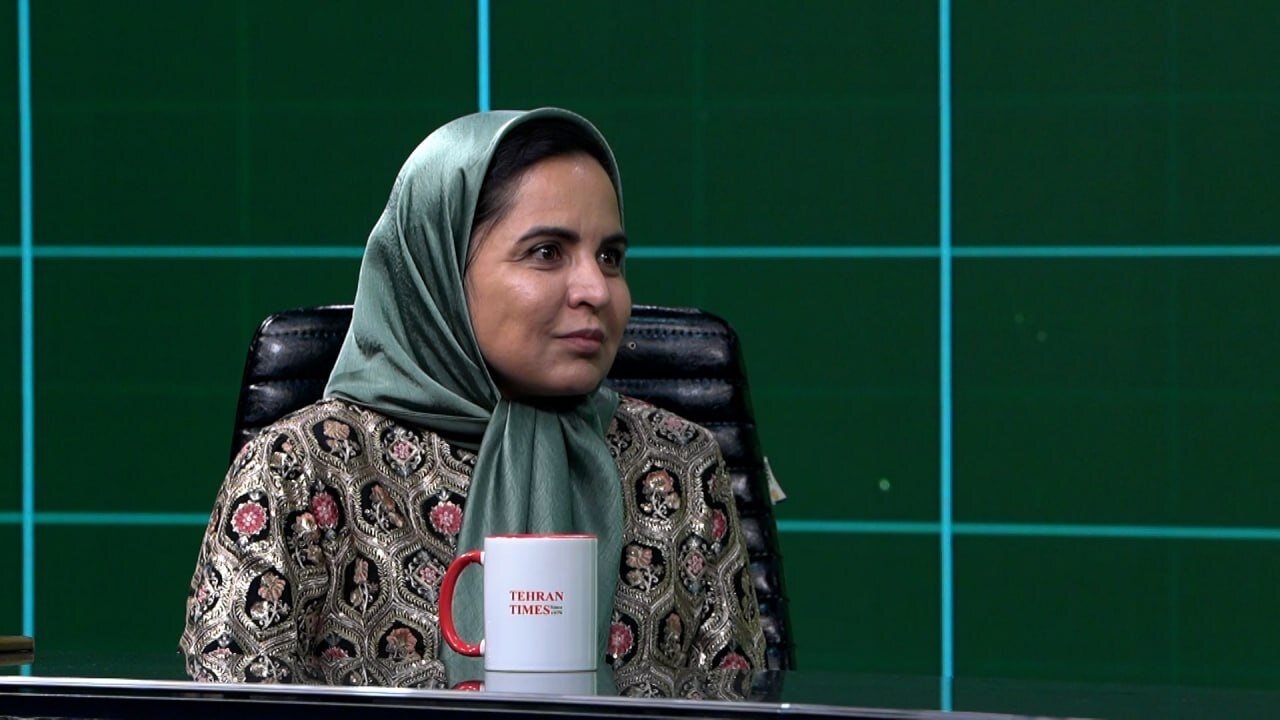
TEHRAN - Tourism is often measured by the visitors it attracts and the income they generate. But what if its success could also be measured by the forests it helps protect, the traditions it keeps alive and the opportunities it creates for local communities? This is the thinking behind regenerative tourism, an approach that seeks to move beyond reducing tourism’s negative impacts and toward restoring and strengthening the places people visit.
In Iran, the idea is finding relevance in rural destinations where nature, cultural heritage and local livelihoods are closely intertwined. Soheili Village on Qeshm Island offers one example, where mangrove conservation, community-based tourism and local enterprise have developed alongside one another. To explore the meaning and potential of regenerative tourism, we spoke with Dr. Azadeh Abedinzadeh, a tourism expert who has worked with rural communities in Iran and was involved in preparing Soheili’s application for the UN Tourism Best Tourism Villages initiative.
The full text of the interview is as follows:
First of all, I would like to ask you about Soheili Village. You played a major role in Soheili, which, along with several other villages in Iran, was recently named one of the Best Tourism Villages in the world.
Soheili is like a star shining in the sky, if we may put it that way. At the beginning of our discussion, we came across a story or legend about the name “Soheili.” When I first entered the village in 2018, I observed all the tourism activities taking place there and joined a group of local residents who were working in tourism.
I joined them as a facilitator--someone who could work alongside them, bringing the knowledge we had acquired at university and the experience we had gained in the professional field to help develop a marine tourism destination. It was a great opportunity for me to take part in preparing the dossier for the Best Tourism Villages of the world initiative, as one of the people responsible for compiling the application.
How much did the local community support the initiative? How involved were they, and how much did they want this to happen for Soheili?
When we talk about the rural lifestyle in southern Iran, we see a value chain--a table, so to speak. Unlike the familiar slogan of “from farm to table,” here it is “from the sea to the table.” َA table that is adorned with a woven mat called Badil.
These people had been continuously hosting domestic and foreign tourists for at least 10 years, so they had come to understand the economic benefits of tourism. They had also taken an important step back in 1385 [2006–07], when they secured a presence and equipment for a tourist jetty in the mangrove forest.
But what fascinated me even more was the way this community behaved. Whenever I went into the village, I saw that people in this southern region were hosting migratory birds. When the tide goes out in the mangrove forest and the water level drops, the people go fishing, while the birds around them also feed on the fish.
I never saw birds being hunted in southern Iran. When I asked them, “Well, these birds are eating the fish you catch. Why don’t you keep them away, perhaps like a scarecrow in a field?” they would say, “Just as we benefit from the sea, this is the birds’ share of it.”
This broad-minded attitude toward nature really impressed me. During the Kong-e Harra season--the young mangrove shoots, which are being collected at this time of year--they gather them, and their children take responsibility at home for growing mangrove seedlings and saplings.
In other words, they are taking care of their own environment. I believe this reflects a form of social and intellectual maturity that has developed within the community: they benefit from nature, but they also take responsibility for protecting it. That was the most beautiful thing I experienced in Soheili.
Tell us about the mangrove forests. Perhaps some of our readers are not very familiar with them.
Mangrove forests are forests that grow and develop in tropical regions. They are not unique to Iran. Their roots are adapted to being submerged, and the roots of these trees filter water. They desalinate seawater through three layers found on their roots, producing fresh water that the trees can then use.
Within the tangled roots of the mangrove forests, which are said to have inspired the design of industrial desalination systems, we can observe a wide variety of aquatic creatures. We see crabs and mudskippers, for example. The mudskipper is an interesting fish with a distinctive and attractive appearance. It burrows into the mud, loosening it in a way that is almost like ploughing the soil, allowing air to move through the mud.
So, we have a unique ecosystem in the mangrove forest. There are shrimp, Gariz fish and Jahro fish. It is an ecosystem that has been building and regenerating itself for thousands of years, while humans also benefit from it.

So, the wonder is that you have a forest growing and thriving in salt water, which is something truly remarkable and extraordinary in its own right.
Yes. Interestingly, this mangrove forest has been designated as a biosphere reserve. When we talk about a reserve in the context of natural sites, it means that the people living around the mangrove forests are custodians on behalf of the world. They are expected to use these resources responsibly, so that future generations can also benefit from them and their quality of life is not diminished.
At the same time, they are accountable to the world for how they protect these forests. These forests are registered within Qeshm Geopark. Qeshm Geopark was the first geopark in West Asia, and today we have three geoparks in Iran that are registered with UNESCO.
Let me start questions about regenerative tourism with one of the most fundamental questions. What is that type of traveling and how does it differ from sustainable tourism? And was sustainable tourism not enough in itself?
Sustainable tourism emerged from CoP20, with the collective resolve to forge a more sustainable future for the world's natural heritage.
At one point, we needed that concept. What it basically means is that we examine the impacts of tourism, identify them, and try to reduce the negative impacts. But, as has been demonstrated by experience around the world, negative impacts can never be reduced to zero. The aim in sustainable tourism is therefore to further develop and increase the positive impacts of tourism.
But regenerative tourism has a difference from sustainable tourism.
In a way, regenerative tourism represents a new paradigm in global tourism. It means working alongside the local community through participatory approaches, so that while they are managing the impacts, they are also able to do what is truly the right thing to do. Tourism is approached with a forward-looking perspective. It is not simply about tourists coming to a village.
In the context of sustainable tourism, we have always opposed mass tourism. But now, in regenerative tourism, we say that perhaps 10 tourists who behave destructively and damage the environment can cause more harm than 100 tourists who understand nature tourism and appreciate and respect the local community.
These distinctions have emerged in the definitions because the economic and social impacts that tourism should have on a village cannot simply be defined or achieved through restrictions alone.
You said that regenerative tourism is a new paradigm. I want to ask you about a possible paradox. A tourist comes into a village, consumes water and spends money. We want to know what that tourist can actually do for the environment so that, when they leave the village, they have left something behind--that the environment is better, the local community has earned more income, young people in the village become interested in staying there, and traditions or even foods that are at risk of disappearing are revived. What can happen to create these positive impacts?
In regenerative tourism, we are making a transition from sustainable tourism, in a sense. We are not rejecting sustainable tourism; rather, we are going beyond it and adding another dimension.
For example, when a tourist visits Soheili Village during the season for planting Kong-e Harra, the local community involves the tourist in the process and the event. Chichak-haye Harraye Soheili is an event during which children go into the mangrove forest and collect mangrove seeds themselves.
The child who is being educated and raised in this way is learning in front of the tourist. The children draw pictures there and explain the process of growing the seedlings to visitors. In this way, the tourist sees the next generation. If the tourist is interested, they are given the opportunity to plant 10 mangrove seedlings of their own.
Each tourist becomes, in a way, a cultural ambassador for the village they have visited. They see that, with the growth of tourism, young people in the village are becoming interested in staying there.
For example, we had someone from Qeshm city who had a real-estate office there. He has now returned to the village, established an eco-lodge and is living in the village.
What could be more beautiful than creating entrepreneurship in this way? A person can earn a living while remaining connected to their identity and taking pride in it. This is social capital. They explain, introduce and describe this to their guests, and tourists can easily understand the flow of tourism and the local economy.
Another example of local community participation is the fish caught that same day. The fresh fish is cooked by village women in the kitchens of the local restaurants, so the food still retains its homemade taste.
So regenerative tourism is not simply about tourists coming to a village, taking a few photographs and leaving with nothing more than images of the place.
Rather, the tourist creates a deep memory of the village with the help of local people. For example, the local Nan-e to-mushi bread is prepared for them early in the morning. And if they want to participate and bake it themselves, they are given the opportunity to do so.
These are the truly deep experiences that regenerative tourism offers.

When we talk about tourism in Iran in broader terms, both for international and domestic tourists, cities such as the lush cities of northern Iran in Gilan and Mazandaran provinces, as well as historic cities such as Isfahan, Shiraz, Yazd, Tabriz, Qazvin and Kerman, have traditionally been viewed as tourism destinations. But over the past few years, there has been a greater focus on Iran’s villages. How do you see this shift, and what capabilities and potential do you think Iran’s villages have for tourism? And how much could they actually contribute to attracting tourists in the future?
One of the very positive developments is that, if we look back, whenever we talked to travel agencies or did a quick search on various platforms, we would see the classic tourism route in Iran. It would generally start in Tabriz, then continue through Qazvin, Tehran, Kashan, Isfahan, Yazd, Kerman and Shiraz, and sometimes eventually end in Bandar Abbas or Bushehr.
But over the past few years, particularly from around 2017 onward, we can say that rural tourism in Iran has gained momentum. Some people become tired of their mechanical, urban lifestyles and of modern life, and they want to go and stay with a rural family, surrounded by nature, in search of something they feel they have lost.
And what is that something? It is an authentic Iranian culture that they have continually heard stories and narratives about. When we want to talk about tradition and authenticity, the village is still one of the places where we can find these things.
In a village, you have nature; you can see authentic, traditional architecture. In most villages, traditional clothing still exists, as do traditional foods and cuisine.
Today, whenever we buy something, if it carries a “healthy” label, it attracts more customers. Tourists, too, know that they are making a choice that will give them the greatest return--not only in terms of the money they spend, but also in terms of the time they devote to the trip. They want that time to create the greatest possible value for them.
Q: So, in order to reach this desirable point, what challenges do you think we face?
When a tourist enters a village, they have certain expectations. The most important thing that needs to happen is education.
When we talk about education, we are not simply saying that tourists need to know what behavioral guidelines they should follow and what boundaries they should respect. The local community, on the other hand, also needs to be aware of these issues.
One of the most important aspects is intercultural communication. A villager who has previously interacted with people in their own ethnic and cultural community, using the simple language of everyday life, may suddenly find themselves hosting people from different ethnic backgrounds and tourists of different nationalities.
They therefore need training. And one of the most important pillars of tourism and hospitality is health and safety, which they need to learn about. They must also be able to introduce the ancient culture inherited from their ancestors to tourists in a clear, fluent and engaging way.
Q: Who is responsible for providing this training?
When we look at the stakeholders involved in tourism, the first responsible body is naturally the Ministry of Cultural Heritage, Tourism and Handicrafts.
On the other hand, if we are talking specifically about villages, the largest number of tourism establishments found in Iran’s villages are eco-lodges. We have a professional community of eco-lodge operators, while educational institutions can serve as the implementers of training programs.
But we should not look at this phenomenon from only one dimension. The village head, for example, needs to receive appropriate training, with the Ministry of Interior responsible for that area. The village council also needs its own training, while people working in tourism establishments need specialized training relevant to their activities.
And the most important group that we focus on in rural tourism and, particularly, regenerative tourism is children and adolescents.
They need to be educated in a way that helps them understand the value of their authenticity and traditional clothing. They should recognize their traditional dress as something valuable--not merely as something being presented to tourists--and understand that tourists have traveled there to experience the tangible and intangible cultural heritage of the village.
Q: As a final question, I’d like to ask you to share some of your experiences of the villages you have visited and, in a way, encourage our audience to travel to rural areas.
Based on my experience, I believe that what is particularly valuable is the fact that Iran now has five villages that have managed to join the Best Tourism Villages network. Each of these villages has its own very distinctive and unique character and is shaped by a particular climate and geographical environment.
When we talk about Kandovan, for example, we are talking about a terraced village nestled in the heart of the mountains, with its beautiful traditional houses. Tourists have the opportunity to stay in this authentic architectural setting and enjoy foods that are naturally produced and processed in the village.
From there, let’s move toward Esfahak, a village in South Khorasan province. This village was destroyed by an earthquake, and its people came together and rebuilt it from the ground up. Here, we can see a kind of translation of resilience into practice. This is also a clear example of regeneration: the villagers have revived even the traditional mud bricks, restoring the way these houses were originally built and the standards and characteristics of the bricks that were used.
Then there is Kandelous, which is now among the world’s Best Tourism Villages. The village has the legend of Mina and the Leopard. I think it is very interesting when this story is told to us in that setting, together with the Mina and Leopard dolls. It raises the question of how human beings can interact with wildlife without causing it harm.
Then we come to Shafiabad, where women are actively involved in tourism. Through regenerative tourism there, visitors realize that part of the money they spend on purchases in the village goes toward restoring the qanats.
These women have reached a level of vision and empowerment that allows them to set aside part of their income to restore the qanats, despite the very high cost of doing so. Life in the desert depends on water, and a qanat is essentially a source of life in the desert.
And then we come back to Soheili, where wetland tourism, culinary tourism and the conservation-oriented use of the mangrove forests create a very different experience. A tourist can take a wooden boat into the mangrove forest, catch a fish and have that same fish cooked for them. They can also learn how the food is prepared. At some of the eco-lodges, visitors are even taught how to weave mats.
When a tourist comes and learns a skill, they are acquiring something new. Human beings are naturally inclined to learn and develop, to keep their minds active and prevent them from becoming stagnant. And this is done through the hands, through developing practical skills and becoming capable with one's own hands.
These five villages have five different stories to tell. Anyone who plans a journey through Kandovan and Kandelous and then continues to Shafiabad, Esfahak and Soheili will encounter an authentic culture at the heart of Iran.
These villages have earned recognition through the UN Tourism’s rigorous evaluation process, and the people of these villages are waiting to welcome you, the tourists, with the doors of their homes open.
AM
Leave a Comment